Thursday, October 07, 2010

A Few Words On Branding

It's incredibly difficult to build a brand. For every Apple, Nike, and Coca-Cola, there's a million different failures that never attracted consumer recognition and loyalty. So its bizarre to find that in a bad economy, when every industry is struggling, established brands are spending millions of dollars to trash their brands and destroy their iconic symbols.

Take the Gap, which changed from their iconic blue box to... well, this universally-panned monstrosity:


Already, Gap has been forced to pretend this was all part of some social media experiment. Actually, Gap paid millions to a "creative agency" (which, ironically, touts the old logo on its website.)

We've seen this type of thing before. Remember when Tropicana lost its mind?

Tropicana
Yes, This Is More Generic!

Now, I know business is down these days. So I'm going to save the corporations of America a lot of money. Instead of these businesses needing to pay consulting firms and market research teams millions of dollars to redesign their beloved, iconic logos into horsetrash... I mean, "dynamic research driven graphic design paradigms," I'm going to perform this service for free. Eat your heart out Laird and Partners...


The Real Bullies

Hope Witsell. Phoebe Prince. Tyler Clementi. It seems like every day another name is added to the list, another bullied kid who took his or her own life. A lot of blame, falls naturally to the bullies. They harass, they harass and they harass, and eventually, some of their victims break.

But the truth is, kids are kids. They're stupid. They're callous. They're short-sighted and off-the-wall. We've all been there. We all remember when we laughed at hugely inappropriate things, thought adults were making a big deal out of nothing, and did idiotic things to impress our peers. We still do these things now that we're older, even if it’s less often, even if we now know better.

Of course, nearly all of us also know what it's like to be bullied. Throughout elementary school and intermediate school, I was a frequent target of bullying.

I was chubby and imaginative, with little impulse control, which made me stand out like a giraffe in a herd of meerkats. I used to pretend the backs of the seats on the school bus were football fields, and my fingers were football players, running down and tackling each other. Football's cool, I thought. But some kid mashing his hands together the whole bus ride making crunching sounds decidedly is not.

I couldn't understand why kids made fun of me. It was frustrating, because my parents always taught me that if you're nice to others, they'll be nice to you. But this wasn't the case. I never got beat up, but the verbal abuse and shunning I got was painful for a kid who just longed to be accepted.

But I learned something very important during those years. Teachers and administrators don't give a damn.

I reported my harassment dozens of times (you can imagine how popular this made me) but the most that ever happened was the two of us, bully and me, getting called into an office and being forced to agree to be friends. Of course, the bully would say he was sorry. But seconds out of the office, he'd whisper that I was dead. Talking got nowhere.

No one took me seriously, I began to think. No one knew how bad it really was. How could I let them know how serious it was? What was the most serious thing I could do?

I threatened suicide. Was I serious about it? At times, I thought I was. I just saw the small space around me, filled with misery. Suicide seemed like the only escape.

But the primary goal of the threat was to alert the adults to how serious I thought the teasing was. That it needed to be dealt with harshly... or else.

I didn't get the response I expected. Instead, teachers and administrators made it clear that there was something very wrong... with me. Thinking about suicide made me a supremely messed up young person. Like Angelina Jolie in Girl, Interrupted. I needed help, counseling. I was the one who needed to be changed. I was broken, maybe irrevocably.

Hope Witsell, for instance, was forced to sign an "Anti-Suicide Pledge."

This did nothing to dissuade me from suicide. In fact, it reinforced the fact that suicide was the only thing that could be done. We didn't have Google back then, but I'm pretty sure it was the moment when I would have looked up "How To Commit Suicide." The biggest threat I could think of hadn't convinced adults to take the bullying seriously. Instead, it had convinced them that I was the one that needed correcting. I started to think... maybe they were right.

The thing is... they were. In a way. There was nothing wrong with me being chubby, or imaginative, or a dreamer, or an oddball. But I was ill-equipped to deal with the repercussions of being those things.

I didn't know how to brush off an insult, or respond with something witty. I didn't know what I know now: that bullying is actually a natural human response to strange, odd, different, social behavior. I thought that people just decided one day to attack me. And if someone told me it was my own damn fault... well, that would have made me even more depressed.

The reactions of my teachers and counselors may have been right from an adult perspective, but as a kid, those reactions crushed me. Nobody cared.

I suspect that's how Tyler, and Phoebe and Hope felt. Nobody cared. What I needed was someone who truly cared, truly understood. Someone who would unmask the bullies and leave them as humiliated and defeated as I was. I needed a white knight. I needed an avenger. Today, I see the inherent problems with this approach, but at the time, it made sense. I needed someone to teach the bullies a lesson.

Of course, no one did. I transferred schools in 8th grade, a solution which Phoebe Prince tried in a similar fashion. Fortunately for me, there was a kid there far worse off than I was.

I came into my new school very careful, trying not to make waves. And in my reserved state, I observed. There was this one kid, I'll call him Stuart, who always seemed to get laughed at, and not in a good way. And I recognized a lot of the things that I did myself-- the daydreaming, the singing to himself, the constant calls for the teacher's attention.

One time, we were in gym class, playing kickball. Some kids were goofing off, laughing. A ball bounced away, and landed near Stuart. I saw him get upset. I knew what he was thinking. He'd been daydreaming, and not paying attention. But then he heard the laughter, he saw the ball almost hit him. Someone, clearly, was aiming to hit him, humiliate him.

He flipped out at ME.

He chucked the ball in my direction, he missed. He picked up the kickball base and flung it at me, it fluttered harmlessly to the floor. He yelled at me and stormed off, tears in his eyes.

Then the laughter really started. I found myself bewildered, but joining in. The kid was crazy.

But I stopped myself. That was me, I thought. I remembered a gym class not so long before, where a ball had hit me in the head. Maybe it was on purpose. But my reaction… storming up to the kid I THOUGHT had done it, and giving him a meek punch in the stomach, hadn't done anything but invite more laughter, more humiliation. I finally got what my parents had said about "just ignoring it." My reaction poured fuel on the fire. In this case, Stuart's reaction had started the fire.

This was a lesson I couldn't learn from anybody. I had to learn it myself. From watching even dorkier kids like Stuart. No adult could make that lesson stick in.

They shouldn't have tried. Because the only way to beat bullies is to outlast them. To grow and mature to the point where you can see what bullying really is... a defense against the threat of someone different. No words can force someone to arrive at that realization (my parents tried the tactic of telling me that they themselves were bullied, but that just convinced my young self that being a loser was genetic). In my case, I gained perspective by switching schools. Others get it by moving onto college, going to a new town, going to camp, traveling abroad, joining a youth group, playing on a sports team, joining model UN, acting in a theater group.

And sometimes, it takes more than one of these things to expand someone's view of the world. Phoebe may have switched continents, but she was still stuck in high school, still stuck in the same patterns that had defined her life back in Ireland. She never got to a place where she could get perspective.

Growing up means moving out of your tiny sphere of a world into the much larger one, and only then do you begin to realize that every single person in the whole damn world's been called a slut at one time or another, and the word "slut" itself is just an uncreative way to announce a bully's own jealousy or prudishness. Don't at least some of us want to scream at Phoebe: "Come on! They're just mad because you slept with their boyfriend! They're nothing! They're specks!" But to Phoebe, they were the only thing she could see.

Bullying loses its effect once you can see it as a tiny grain in the hourglass of life, something that will slip through to the bottom of our minds at sometime in the future, kept as a painful memory but also an important reminder to treat others with humility and respect.

Once your world is larger, you begin to realize the biggest bully was yourself, because only you made you believe there wasn't anything worth living for outside acceptance from a stupid, immature clique of people who had horrible insecurities and problems of their own.

Tyler didn't kill himself because he was filmed with a guy in his bedroom. He killed himself because he couldn't see that being filmed with a guy in his bedroom wasn't the end of the world. Homophobes would judge him, some immature people would laugh. If he could see beyond them, he'd see that nobody else would care about some stupid video some stupid kids made.

So what can parents do? Or teachers? Or counselors? They can't tell a kid the truth, but they can help open up a kid's world so that child can experience it for his or herself. They can do their best to show kids how beautiful and wonderfully wide the world is. That there's more to the world than the mean kids within a 5 mile radius. They can help a bullied girl discover that most people in her city, state, country don't think that she's a slut... and neither do the billions of other people in the world.

They need to show a kid another escape route. Often, it can be inside the school, among a group that embraces the differences others ridicule. In some cases, it may take going a little further. It's not running away from problems... it's giving kids the space to realize that they're actually not huge problems. "Slut!" "Homo!" "Look at her titties!" are not huge problems. Feeling like there's nothing else out there... that is.

Shut a kid in a building with tormentors, they will think that's all there is. Raise them up above the fray, and they can see for miles.


Friday, October 01, 2010

The Social Network Opens Today

The Social Network opens today, and given how popular and essential Facebook has become, it's easy to forget that this movie could have featured a different social network entirely. Even as late as 2006, it wasn't clear who the social networking winner would be. I wrote the following article in 2006 for MSNBC. MSNBC never ran it, but I got some great quotes from Cameron Winklevoss, one of the villains (or victims, depending on how you look at it) in The Social Network movie. 

The MySpace That Wasn’t...
And The Ones Yet To Be
 
​Figure skater Sasha Cohen is doing it. So is Weezer frontman Rivers Cuomo. You can’t pick up a newspaper or magazine (even this month’s Playboy!) without hearing about MySpace. With more than 75 million members, the social networking site dominates the news. Why did it succeed while others failed? And is there anything that can beat Rupert Murdoch’s $580 million dollar baby?

​“We founded social networking,” says Andrew Weinreich, founder and former CEO of the now-defunct SixDegrees.com, often credited as the first website to employ social psychologist Stanley Milgram’s six degrees of separation theory, which postulated that everyone is connected through common acquaintances. Weinreich founded SixDegrees in 1996, seven years before MySpace and eight years before Facebook. “We saw early on incredible excitement about the idea of linking friends to friends and friends of friends online,” he says.

​Of course, this month the MySpace guys, Chris DeWolfe and Tom Anderson, are on the cover of Time’s 100 Most Influential People issue, and Weinreich is not. But he doesn’t hold any grudges. “Our story is a classic example of the technology needing to catch up with an idea,” he says.

​Back in 1996, Weinreich says, few people had digital cameras. This presented a problem. “People were clamoring to put photos up on their pages,” he says. “We actually thought long and hard about having people mail us their photos and hiring interns to scan them in to the system. But with the time and the cost, there was no way we could do it. The big difference today is that the cost of technology is way down and there are a lot more people online. And nearly everyone has a digital camera.”

​At its height, SixDegrees had more than 3.5 million members. Weinreich sold the site in December of 1999. Back then, its marketing department was talking about future plans to include instant messaging, online study groups and webcam services. But by the next December, SixDegrees was dead, a victim of the dot com bust.
​“MySpace and Friendster started after we closed,” Weinreich says. “They’ve done a great job. Their timing was impeccable.”

​Timing is a big part of why some social networking sites succeed and some don’t, says Harvard University graduate Cameron Winklevoss, one of the founders of ConnectU, a college student social networking site. In the winter of 2002, Winklevoss, his brother Tyler and friend Divya Narendra dreamed up a site that would help connect students from different colleges around Boston and eventually, the world. However, Winklevoss says, they got beat to the punch by three months—by a fellow Harvard student they had hired to program their site. That programmer was Mark Zuckerberg, and his website was Facebook, which now counts more than 7 million college students as members. According to Businessweek.com, Zuckerberg recently rebuffed an offer of $750 million for his site and is looking to sell for $2 billion. And Rolling Stone magazine featured a glowing profile on Zuckerberg in an issue last month. ConnectU, on the other hand, Winklevoss says, has 60,000 members and no such deals or feature stories in the works.

​“When we asked [Mark] how our site was coming along, he told us, ‘Hey, I’m a little busy; I’ll get back to you,’” Winklevoss says. “A couple days later we read about Facebook in the college paper. It was pretty shocking.”

​Winklevoss and his co-founders filed a lawsuit against Zuckerberg for stealing their ideas and the computer code for their site. For his part, Zuckerberg has counter-sued for defamation of character and denied the allegations.
​Winklevoss has very little bad to say about the Facebook site itself. “It really has become exactly what we envisioned it would be. The idea is solid. These sites are so hot right now that people are willing to invest millions.”
​ConnectU is still actively recruiting new users, but Winklevoss acknowledges his site has little chance of winning the competition. “The idea of being a part of two similar social networks doesn’t appeal to people. And Facebook got there first. People don’t want to rebuild their network of friends on another site.”

​Other social networking startups are hoping that isn’t true. TagWorld, founded in July 2005 and now in beta testing, hopes new features and functionality will lure users away from social networks like MySpace. 

TagWorld combines a social network with drag-and-drop web publishing. Related photos, music clips, and videos are grouped together using “tags,” or keywords, helping the users who posted them connect with each other. With 1,613,122 users registered in less than a year, the site is off to a strong start, says TagWorld spokeswoman Paula Gould. “We’re not just a profile page. We give you a gigabyte of space and an easy way to create a website without knowing how to use HTML,” she says. “Any number of social networking sites have similar features, but we have them in one space.” 

TagWorld is on a publicity blitz, putting up billboards throughout the Los Angeles area depicting TagWorld users and sponsoring a battle-of-the-bands contest to choose a song for the soundtrack of New Line Cinema’s new movie “Snakes on a Plane,” which has received enormous internet buzz. 

“People are catching on to us,” Gould says. “We intend to be a part of social networking for a long period of time.”

​“Some social networks stick and some don’t,” Winklevoss says. “Look at Google’s Orkut or Yahoo’s 360. They haven’t really worked. Friendster didn’t change for two years and they died… no one talks about them anymore.”

​Well, hardly dead, but Friendster, founded two years before MySpace, has fallen behind its slightly younger cousin in terms of membership and buzz. Friendster started off strong, amassing one million users in a little over a year. Today, they claim more than 27 million. But users complained that the site was too slow and the interface too restrictive. “In the beginning we had too small a tech team in place,” says Friendster spokesman Jeff Roberto. “We couldn’t meet demand at peak hours of the day and we couldn’t launch new features. And that diverted a lot of traffic to other services.”

​Former head of business development at Friendster, Jim Scheinman, is now vice president of business development and sales for Bebo.com, a high school and college social network with 22 million members worldwide and is more popular in the UK than MySpace. Jim cites user testimonials as evidence that not everyone is sold on MySpace. One user writes, “Bebo is by far the best social site available. It kicks MySpace's ass!!” Another observes, “Bebo is like a much less confusing MySpace.”

“We believe that the ultimate winner in the social network space will be the company with the best product and the most rabid and loyal customer base,” Scheinman says. “We don't actively encourage ‘Beboers’ to leave other SN sites and come to Bebo, they just do it on their own.” Although, he says, Bebo has to adjust its strategy to attract users in North America. “There are more entrenched players in those markets,” he says.

​Weinreich, for one, doesn’t believe that MySpace will dominate forever. “The best applications we haven’t seen yet. Take eBay for example—why can’t the buyer and the seller be connected in a social network?” he muses. Weinreich and his partners plan to launch a new mobile social networking site in three to four weeks, the details of which he keeps a secret, with all the competition out there. “The best social network we have yet to see,” he says. “MySpace hasn’t fulfilled all of the vision.”
 

Friday, September 24, 2010

I'm Pretty Sure This Whole Thing Was Staged


Does this look like a guy that's about to heckle Meg Whitman?

Ed Buck, Heckler?
You Be The Judge

As any good conspiracy theorist would do, I did some cursory Internet sleuthing. And at first blush, it appears that Ed Buck is a Democrat. He's donated to Democratic campaigns. He likes animals and hates eminent domain development. And he's heckled before. According to LA Weekly, May 25, 2006:

Concern over campaign contributions erupted at a City Council meeting in February. Ed Buck, a West Hollywood resident, confronted [Abbe] Land and said she had accepted more than $40,000 from entities involved in one council agenda item.

There's just one thing... Abbe Land is a Democrat.

That's just the kind of thing that would send a conspiracy nut off the wall. Then I found this:

Time Magazine, November 9, 1987:
Says Ed Buck, a gay Phoenix businessman and conservative Republican who launched the recall movement last July: "Perhaps their support finally drove the point home to Evan Mecham that this is not a band of homosexuals and dissident Republicans."
"CONSERVATIVE REPUBLICAN!!!" Ed Buck!

And yes, it is the same Ed Buck.

So the question then becomes: Why did Ed Buck heckle Meg Whitman? Is it that he's a tea party style disgruntled Republican? Was he, as Meg Whitman suggested, a plant by her Democratic opponents? Or, far more sinister, was it a plot by Whitman and Christie to boost both their profiles?

Alas, without any smoking gun, say, a signed check from Whitman to Buck, I'd say we probably have to conclude the first probability. Ed Buck is a politically active, fiscally conservative but socially liberal person, who didn't like the fact that Whitman had an event in which she refused to take questions. He's been a vocal proponent of transparency in the past. A Democratic plant seems like a stretch-- this guy beats to his own drum, and clearly is an equal-opportunity heckler.

But that shot of them holding hands.... well. I'll let others do the digging for me.

One last thing. Lets just note Christie's hypocrisy. He talks about bringing America together, and not shouting, when he's done the exact opposite in Jersey. Instead of listening to teachers concerns, he's belittled them. He's raged against the working class. His governing strategy is to take money away from everywhere its needed, while maintaining promises to the wealthy people who donated to his campaign. The school system is weaker now because of him, and all but the wealthiest are struggling. People called him "standing up to" a "heckler" chivalrous (because Whitman is a woman, who obviously can't defend herself), but all Christie was doing was stifling discussion and debate, something he's tried to do at every juncture in his time as New Jersey governor.

This is the guy Republicans think is the future???

Thursday, September 23, 2010

Texas Thinks Education Means Propaganda

School textbooks are brainwashing our kids into becoming Islamic terrorist liberals who hate Christianity and worship at the altar of horse-porn.

No More Teachers No More Books

So says the Texas State Board Of Education.

“I think our documentation clearly shows that the bias is there,” said Randy Rives of Odessa, who drafted the resolution. “And we feel that it was not done on accident.”
Oh my! Randy's figured it out! He's on to the vast left-wing conspiracy that's out to turn America's children into homosexual communist atheists!

For instance, DID YOU KNOW:

-Textbooks say that Muslims once ruled most of the civilized world
-Textbooks say that Christian Crusaders killed people
-Textbooks say that not all Muslims are terrorists
-Textbooks say that some laws passed by liberals worked
-Textbooks don't say that not accepting Jesus will send you to hell
-Textbooks are heavy

"But," you might ask (ha, you said Butt!), "If children don't learn in school that Jesus Christ is their Lord and Savior and that all other religions are just sick, twisted blasphemy, then where will they learn it? My God! Think of the children! The CHILDREN!!!!"

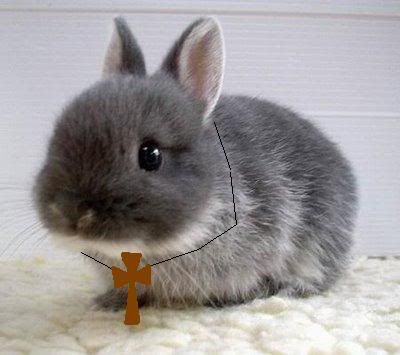
Fortunately for Americans (white, Christian ones), Randy is on the case. That whole crusades thing? Let's shorten that to a paragraph. And replace "forced Jews and Muslims to convert to Christianity on pain of death" to "gave Jews and Muslims fuzzy bunny rabbits to love and cuddle."

Bunny Crusade
They Called Them "Easter Bunnies"

How about the "New Deal," labor and welfare reforms of the post-industrial age? Let's just replace all that with, "Americans prayed really hard, and things just got better and better." Cause that's the real truth.

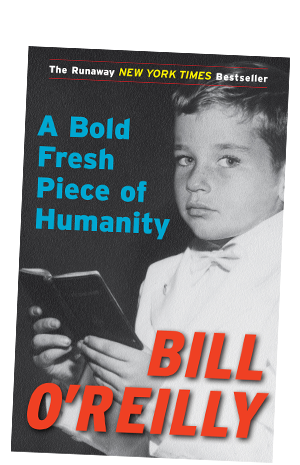
In fact, let's ditch the textbooks altogether. There's really only one book America's children need to read. It's a best-seller, and it's written by an author who looks down on us from up high, judging us mere mortals by the light of his omnipotent presence.

Bill O'Reilly's Bold Fresh Piece Of Humanity
Duh.

Thank God for Randy. At least someone in this country is trying to save our children's souls, instead of filling their heads with useless historical facts and knowledge.

Visitor Map: